

Commercial tourist trains engineered for regulated passenger transport, destination mobility, and long-term operational reliability.
Commercial tourist trains are engineered for professional passenger transport in parks, resorts, cities, and attractions.
These systems provide a structured solution for guest mobility where reliable operations are required. Moreover, both electric and combustion tourist train platforms support regulated road use and controlled passenger flows.
Because commercial environments demand consistency, operators require vehicles designed for daily service cycles. Therefore, modern tourist trains integrate durable drivetrains, modular wagon systems, and predictable maintenance schedules.
As a result, operators can deploy scalable transport systems that support sightseeing routes, internal mobility, or guided tours.
The Train Company supplies commercial tourist train platforms engineered for long-term professional operations.
Commercial tourist trains are available with either electric or combustion drivetrains. However, the correct platform depends on route conditions, operational requirements, and regulatory constraints.
Electric tourist trains operate quietly and produce no local emissions. Therefore, they are often preferred in pedestrian environments such as parks, resorts, and historic city centers.
Combustion platforms, meanwhile, provide higher torque and longer operational range. As a result, they are commonly used on extended sightseeing routes or in areas with limited charging infrastructure.
Both platforms support professional passenger transport systems with configurable wagon combinations.
Fully electric tourist train platforms prioritize quiet operation, reduced local emissions, and lower day-to-day mechanical complexity. These configurations are particularly well-suited for urban districts, waterfront promenades, environmentally sensitive zones, and destinations where noise control and sustainability positioning are operational priorities. Electric drivetrains enable predictable energy management, structured route circulation, and controlled service intervals, with charging access integrated into daily operational planning.
Combustion tourist train platforms provide fuel-based autonomy, extended operational range, and consistent performance in infrastructure-limited environments. These configurations are particularly well-suited for large-scale destinations, remote attractions, and projects that require continuous runtime during peak visitor periods. Combustion drivetrains enable predictable refueling cycles, operational independence, and sustained daily service without reliance on fixed charging infrastructure.
Selecting the appropriate drivetrain requires evaluation of route length, gradient profile, daily service frequency, passenger load, regulatory framework, and long-term infrastructure planning. Each propulsion architecture serves a defined role within professional commercial passenger transport systems.
Explore our commercial tourist train platforms, available in electric and internal combustion configurations.
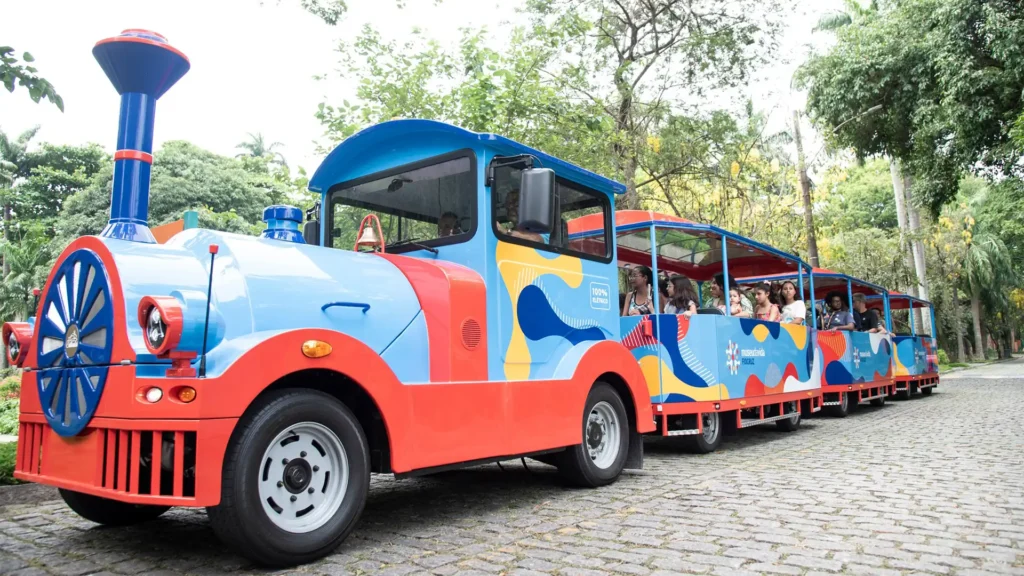
Electric tourist train
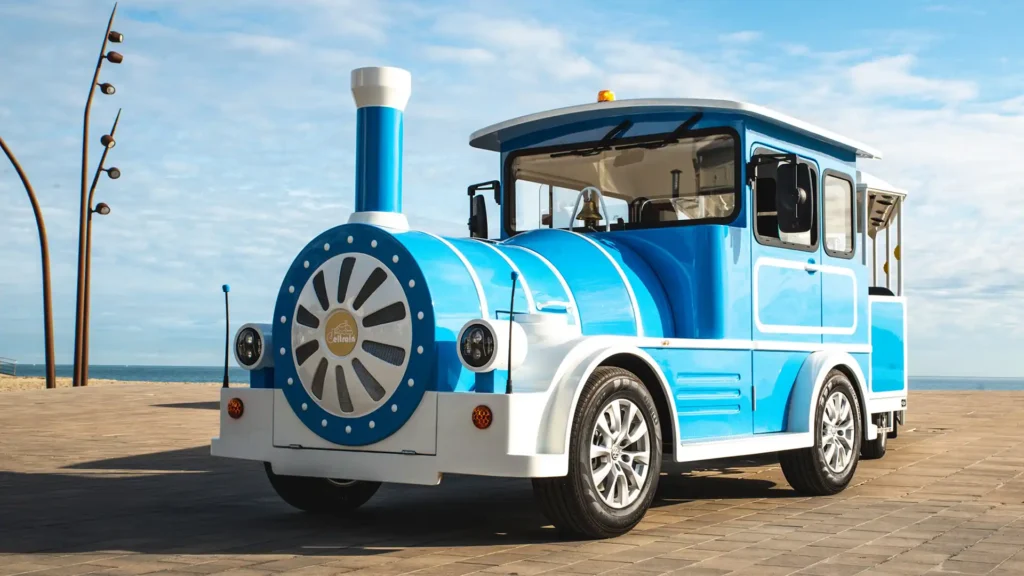
Electric tourist train
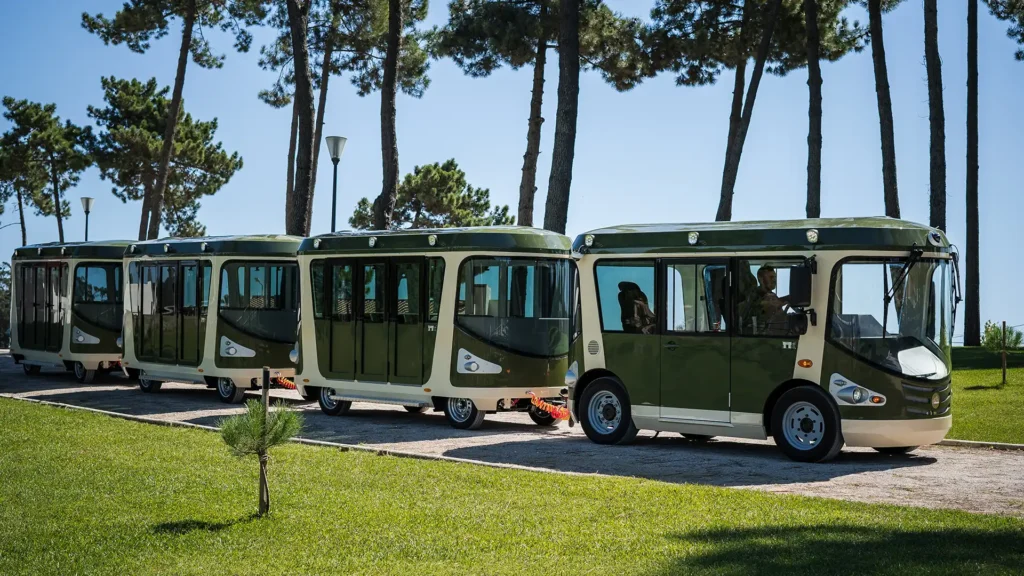
Electric tourist train
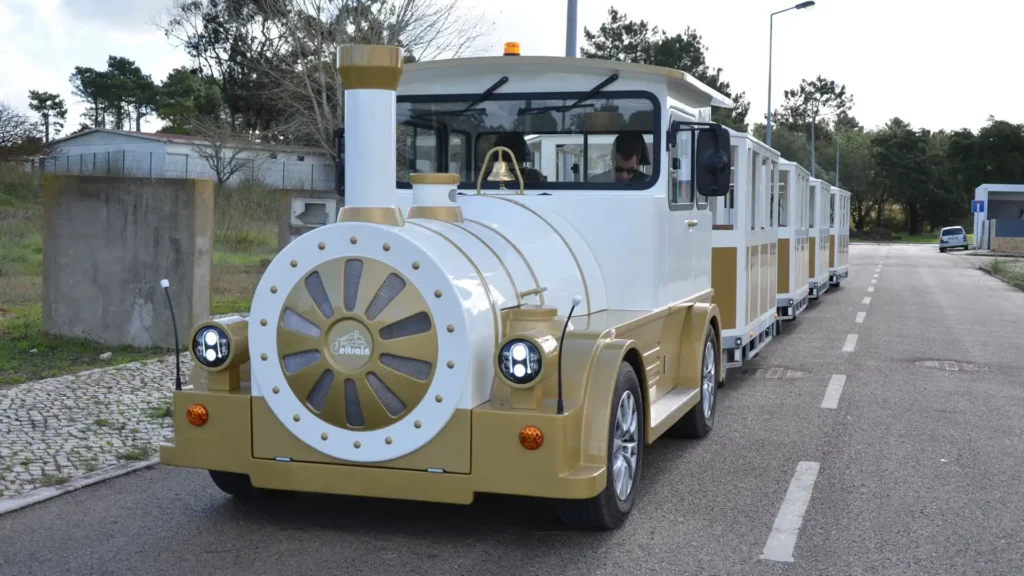
Internal Combustion tourist train
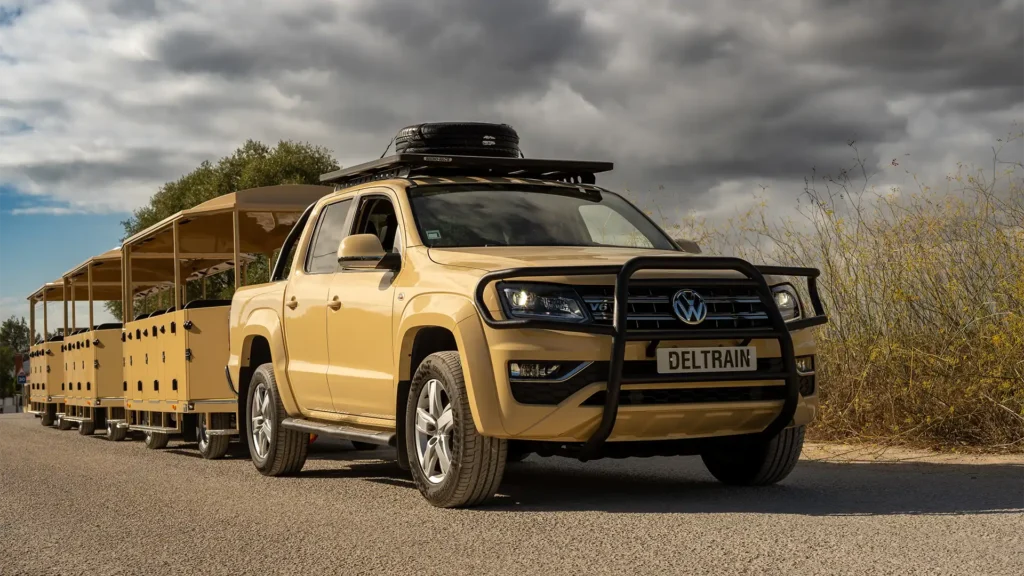
Internal Combustion tourist train
Get transparent pricing and tailored financing solutions for your electric train project. Our team helps you choose the right configuration — and the right investment structure.
View detailed pricing and explore available configurations. Our team is ready to help you select the right model for your location and use case.
Some commercial tourist trains operate in environments where standard road vehicles are not sufficient. For example, wildlife parks, rural tourism routes, and off-road attractions often require additional traction.
For this reason, certain tourist train platforms support four-wheel-drive towing vehicles. This configuration allows operators to maintain consistent passenger transport across uneven terrain.
Consequently, operators can deploy sightseeing trains in environments where conventional road trains cannot operate.

Commercial tourist trains are designed to support scalable passenger capacity. Operators can configure wagon combinations depending on route length and passenger demand.
For example, shorter configurations may serve compact sightseeing routes. However, larger deployments can transport significantly higher passenger volumes during peak periods.
Therefore, modular wagon systems allow operators to expand capacity without replacing the locomotive platform.
Selecting the right commercial tourist train depends on several operational factors. Therefore, operators must evaluate route conditions, infrastructure availability, and expected passenger volume.
Different platforms support different operation scenarios. For example, electric tourist trains are often used in quiet environments with defined routes.
Combustion platforms, however, may perform better on longer routes or in areas without charging infrastructure.
As a result, the correct configuration depends on the specific operating environment.
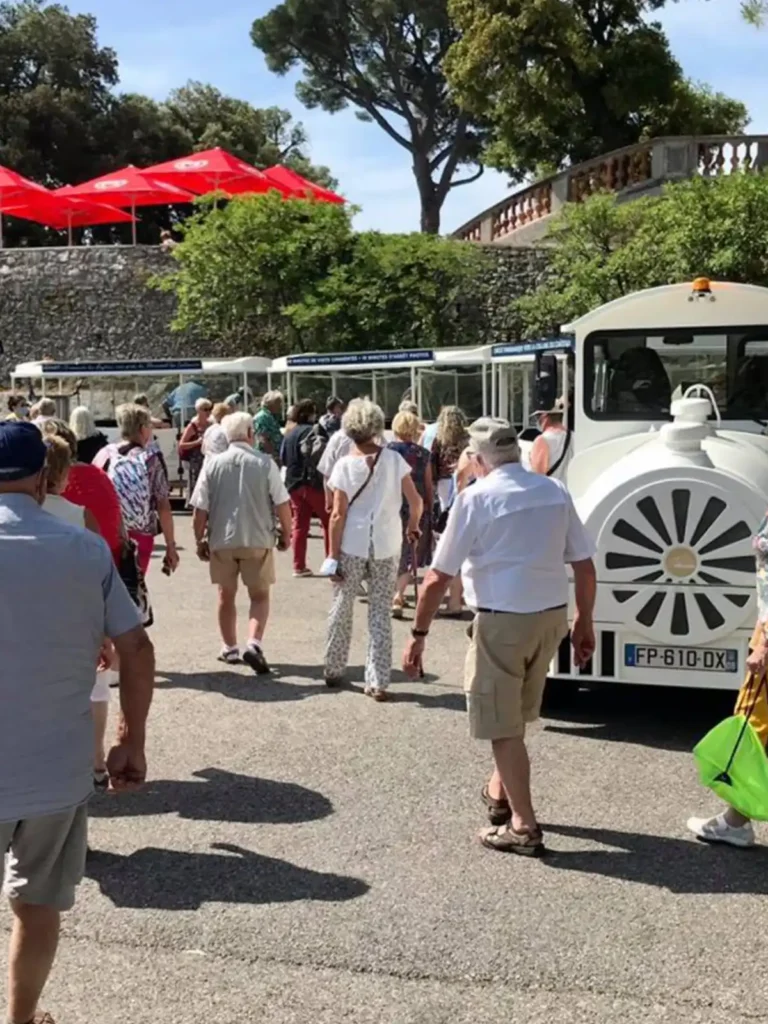
Evaluate whether the route involves urban streets, mixed-surface roads, gradients, or extended circulation loops. Terrain conditions determine traction requirements, drivetrain configuration, and long-term mechanical durability.
Consider whether the system operates in city districts, resorts, zoological parks, campuses, or private destinations. Passenger interaction, circulation patterns, and environmental sensitivity influence vehicle architecture and configuration.
Electric platforms require structured charging capacity, while combustion platforms rely on fuel logistics and refueling accessibility. Infrastructure readiness plays a critical role in determining operational continuity.
Road-legal approval, emissions standards, inspection procedures, and local vehicle classifications must be assessed before platform selection. Compliance alignment ensures smooth deployment and long-term operational stability.
Projected passenger demand, peak capacity, and daily service cycles influence wagon configuration, seating layout, and powertrain suitability. Scalability should align with long-term growth expectations.
Platform design contributes significantly to destination branding. Operators may choose between traditional locomotive-style aesthetics or modern pickup-based configurations depending on the desired guest experience and project positioning.
Structure your commercial tourist train project with clear operational planning and long-term performance alignment. Our team supports platform selection, configuration planning, drivetrain evaluation, and regulatory positioning tailored to your route structure and passenger demand.
Optimized for regulated commercial passenger transport and long-term destination mobility operations.
Commercial tourist trains represent long-term infrastructure assets rather than short-term attractions.
When properly configured and aligned with operational objectives, these systems deliver:
Predictable daily performance
Regulatory stability
Structured passenger flow
Scalable growth potential
Durable mechanical lifecycle
Professional planning ensures that drivetrain selection, wagon configuration, and regulatory positioning align with long-term destination strategy.
A commercial tourist train is a road-based passenger transport system designed for professional operations. These trains are commonly used in parks, resorts, zoos, and tourist attractions.
Unlike recreational rides, commercial tourist trains are engineered for daily service. Therefore, they use durable drivetrains, structured wagon systems, and regulated road-use configurations.
As a result, operators can provide reliable passenger transport for sightseeing routes, internal mobility, and guided tours.
Electric tourist trains use battery-powered drivetrains that produce no local emissions. Therefore, they are often used in pedestrian areas, parks, and city centers where quiet operation is important.
Combustion tourist trains, however, use diesel or gasoline engines. Because of this, they typically provide a longer operating range and a stronger towing capacity.
Consequently, the correct platform depends on route length, terrain, and available charging infrastructure.
Many commercial tourist trains are designed to comply with road vehicle regulations. However, the exact approval requirements depend on local authorities and national transport laws.
For this reason, operators must verify registration and inspection requirements before deployment.
Manufacturers typically provide the documentation required for regulatory approval.
Certain tourist train platforms integrate permanent four-wheel drive (4×4) systems to improve traction and climbing capability.
Therefore, these configurations perform well on routes with inclines or mixed surface conditions.
Selecting the right commercial tourist train depends on several operational factors.
For example, operators must evaluate route type, passenger volume, and local regulations.
Electric tourist trains are often suitable for controlled environments with defined routes. Combustion platforms, however, may be better for longer sightseeing routes or mixed terrain.
Therefore, the correct configuration depends on the specific operating environment and operational goals.
Many operators have additional questions about configuration, regulations, delivery timelines, and maintenance requirements. Therefore, our Tourist Train FAQ provides detailed answers about ordering, customization, service, and operational planning.
You can explore the full FAQ to learn how tourist train projects are structured and supported worldwide.

Page loading